
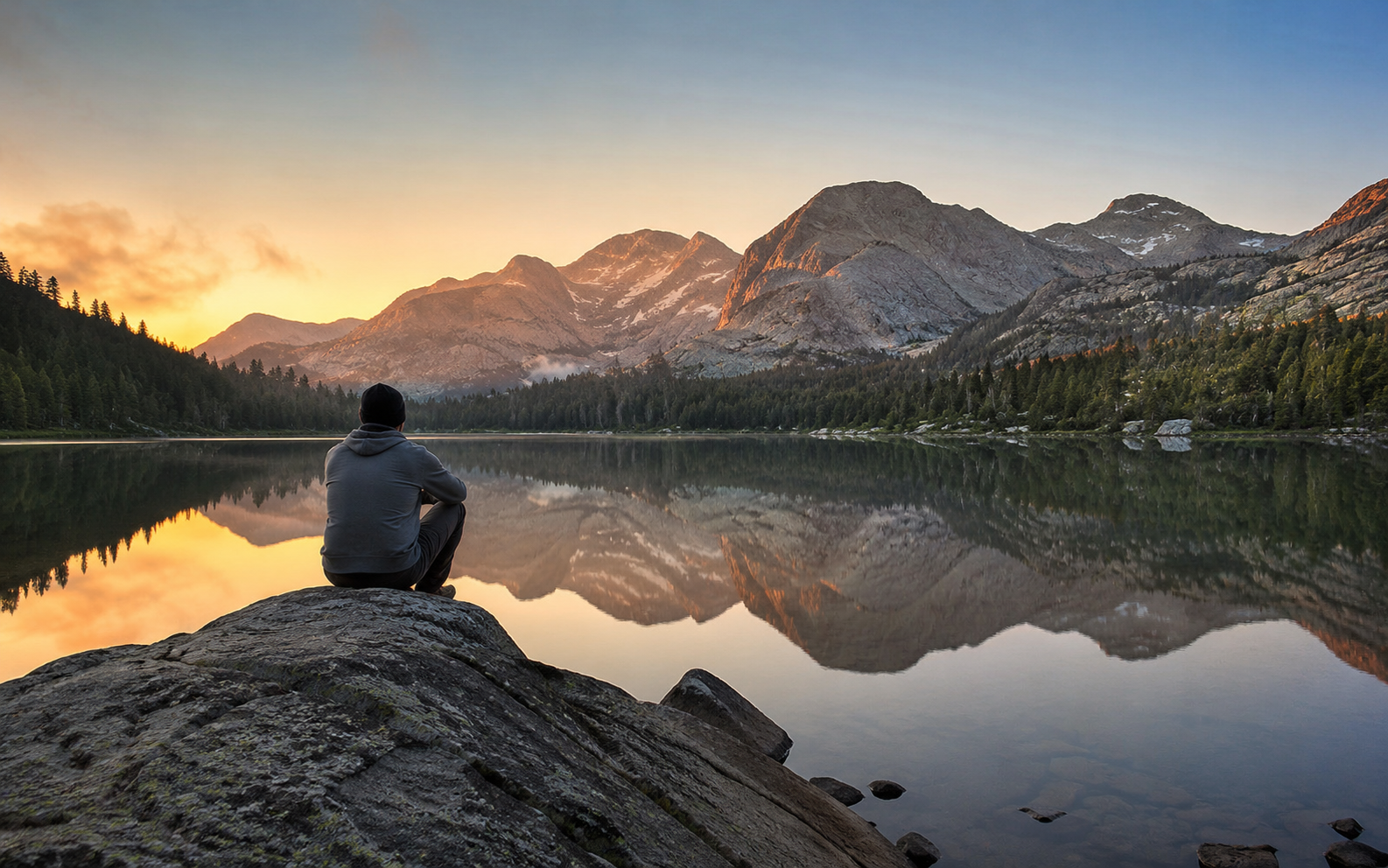
You've booked the cabin. You've packed the bag. You've told everyone you're going off-grid for the weekend. And then, three hours in, you're checking your phone in the bathroom because old habits die harder than you'd like to admit. Disconnecting sounds simple. In practice, it requires more than just driving to a place with no signal.
Why It's Harder Than You Think
Our brains have been conditioned to seek stimulation on a loop. Notifications, updates, messages — each one triggers a micro-dose of dopamine that keeps us reaching for the screen. Removing the source of that stimulation doesn't immediately remove the craving. You'll feel restless. You'll wonder if you're missing something. That's normal, and it passes — usually within about 24 hours.
The trick is not to fight the restlessness but to redirect it. Instead of reaching for the phone, pick up an axe and split some firewood. Walk to the nearest ridge. Open a book you've been meaning to read for six months. The wilderness doesn't need to entertain you — it just needs to be there while your brain recalibrates.
Practical Steps That Actually Work
First, tell people you'll be unreachable. Set an out-of-office, send a group message, whatever it takes. Knowing that nobody expects an immediate reply removes the guilt of not providing one. Second, leave the phone in the car — or at minimum, switch it to aeroplane mode and put it in a drawer. If you need it for photos, buy a disposable camera instead. There's something satisfying about not knowing whether the shot worked until weeks later.
Third, build a routine around physical tasks. Mornings in a cabin should involve coffee, fire-building and a walk before breakfast. Afternoons are for exploring, reading or cooking something slow. Evenings are for conversation, wine and an early bed. Structure replaces scrolling, and after a day or two, you won't miss the screen at all.
What You Gain
The first thing you notice is the quiet. Not just the absence of noise, but the presence of sounds you normally miss — wind through pine needles, a creek in the distance, the particular silence that only exists at high altitude. Your attention span lengthens. You finish a thought without interruption. You have a conversation that lasts more than three minutes.
People who disconnect regularly report better sleep, lower anxiety and a sharper sense of what actually matters in their day-to-day life. The wilderness doesn't solve your problems, but it does give you the clarity to see them for what they are — and which ones aren't problems at all.
Coming Back
The hardest part isn't going off-grid. It's coming back. The first time you check your inbox after three days of silence, the noise hits like a wave. The key is to ease in. Don't check everything at once. Give yourself a buffer day between the cabin and real life. And remember what that quiet felt like — because you can carry a version of it with you, even back in the city, if you're intentional about it.